SUPPORT UK FEMINISTA - DONATE NOW

Why Be Feminist in Northern Ireland?

By Michael Moore, Regional Organiser for Northern Ireland

I spotted UK Feminista’s call for Regional Organisers around eighteen months after coming to feminist activism, as many do, with more questions than answers.

Having spent the preceding few years in student activism with human rights and development organisations, I had plenty to say on international issues like trafficking, honour killings, maternal mortality and Female Genital Mutilation. Each of these major problems inflict untold human suffering every day, and so must remain priority targets for a global feminist agenda. Increasingly, though, I found my attention turning to the inequalities and injustices which quietly pervade the place where I live, Northern Ireland.

Why the continued illegality of abortion, at odds with the law in Great Britain? Why the dire shortage of female elected representatives? Why the culture of sexism wherein almost half of students in a 2008 survey believed rape to be caused by women flirting and drinking? Why do so many people confronted with the Police Service of Northern Ireland’s late-2011 announcement of ten weekly reports of rape continue the fierce assertion of blame on victims? Why does Belfast so resemble a city in which heterosexuality is compulsory? In other areas we remain stuck asking how to measure extent: contrary to the public nature some gender-based abuses – stonings in Afghanistan come to mind – the difficulty of tackling domestic violence in Northern Ireland is compounded by our powerlessness, in most cases, to observe and report.

Such are the questions that attracted me to feminism, spurred on by my immersion as a literature and philosophy student in groundbreaking writing, and involvement in campaigns to Stop Violence Against Women and grant victims of domestic violence recourse to public funds. Since then I’ve met dozens of wonderful, inspiring people with their own stories of feminist awakening and ideas for a transformation of society. I have been a participant in marches and demonstrations, a petitioner against inequality, an organiser of rousing debates between Members of the Legislative Assembly and the women and men who elected them, and I’ve been known to rant against sexist nonsense. The experiences have been challenging and brilliant.

I’ve given an outline here of some of my own priorities, but as a man I can’t claim the experience of patriarchy that any woman can. As a Regional Organiser my intentions are to ask questions, listen intently, catalyse new feminist awakenings and bring people together to articulate and act on their own visions of a feminist future.

If you want to contact us or get involved, email nifeminista@gmail.com, tweet @nifeminista or join our NI Feminista Facebook group.

Posted in News | Leave a comment

Scotland Feminista’s guide to being a devolved feminist

By Hazel Robertson, Regional Organiser for Scotland

Being a feminist activist in Scotland, a country which now has twice the number of panda bears than Conservative MPs, is often quite different to our colleagues in the rest of the UK. I have recently been recruited by UK Feminista as one of the Regional Organiser for the whole of Scotland. One of the reasons these volunteers positions have been created is to account for and react to regional differences whilst still working towards the central feminist goals that UK Feminista embodies.

Being an activist in a devolved area can be quite an isolating experience. We must respond to a different layer of Government, in a unique legal system which affects the issues we can campaign on. We work in a distinctive political setting and with activist groups and UK media that can be unwittingly Anglocentric: Scotland’s top news story will be a footnote in the middle pages of the UK broadsheets and even UK feminist groups can miss out Scotland. I’ll be spending the next year working towards developing and promoting feminist activism in Scotland; responding to the distinct political and culture setting but also making sure that we are very much included in UK wide feminist conversations. This article is the beginners guide to being a Scottish feminist: what arena we work in and what we can achieve.

Politics

Scotland operates in a very different political landscape than the rest of the UK: In Holyrood we currently have a majority SNP government following their landslide 2011 election. Scotland also has an almost negligible level of Conservatives: with 1 MP and 15 MSPs. Infact, the Scottish Conservatives have such a meagre role that there was a suggestion this year that the party be completely reformed under a different guise.

There’s a lot of theories as to why Scots tend not to vote Conservative: the belief that Scots are inherently more egalitarian than their English counterparts; that Scots doggedly hold on to the image of Thatcher as the milk-stealing, shipyard-closing, poll-taxing bogey-women; that more of Scotland’s population is of a low socio-economic status and therefore vote for parties on the left. Whatever the reason, Scotland’s current political landscape is dominated by Labour and the SNP: Labour has it heartlands of steadfast support in the central belt of Scotland. I’m from the sort of Labour safe seat where any animal, vegetable or mineral could run under the Labour banner and still win (I’m still waiting on Scottish Labour to try this theory out). Whereas the SNP are more popular in the North and do better in Scottish elections than UK elections with only 6 MPs but 68 MSPs.

A lot of the time the political landscape of Scotland can feel out of synch with the rest of the UK. On election night in 2010 flicking between the Scottish coverage and the UK coverage felt like watching election results in different worlds. While the UK Conservatives came to an uneasy victory, Scotland was only notable in that absolutely nothing happened. People with a pro-independence bent highlight the ‘democratic deficit’ of having a UK government made, and heavily controlled, by a party that Scottish voters practically swerve to avoid.

Devolution

Being a devolved country means there is another layer of government to attend to. Legislative powers are divided between the reserved powers at Westminster (including foreign affairs, defence, financial and economic matters, national security, immigration and nationality, trade and industry, social security, employment, and importantly for feminist activists: abortion, genetics, surrogacy, medicines and equal opportunities) and the devolved powers at Holyrood- which includes things like housing, transport, health, education, policing and justice. Although the UK Government maintains control over more legislative areas the Scottish Parliament have complete control over the domains that affect the everyday lives of Scots, such as the education, health and transport. Importantly for feminists, the Scottish government has control over justice policy and the police.

The Law

Scotland has its own unique legal system and jurisdiction over legal issues. The important differences for feminists to be concerned about are corroboration of evidence and the ability of a jury to return a ‘not proven’ verdict. Both of these idiosyncrasies have implications for domestic violence and rape cases in which there may be a lack of suitable evidence aside from the victim’s testimony. This is borne out by Scotland’s rape conviction rate stubbornly sitting at slightly less than 3%; about half of the UK average. The recent published ‘Carloway Review’ recommends a change in the law that would mean rape cases were excused from corroboration of evidence. As a result, it is projected that the rape conviction rate will ‘soar’ to the UK average. This is a certainly a welcome change but hardly worth celebrating that the best we can hope for is to catch up with the UK’s dire statistics.[1]

Independence

There is a real prospect of Scotland becoming an independent country. The SNP plans a referendum on Scottish Independence in Autumn 2014. It is unclear if at this point if there may be a third, ‘devolution max’ option, which would mean more legislative powers for Scotland especially in regards to fiscal powers. In all likelihood there will be an independence referendum and the very real possibility of a Scottish divorce from the rest of the UK. The implications for Scottish feminists is that we will be even more removed from the UK feminist dialogue and will continue to tailor our campaigning and our activism to respond to specifically Scottish issues.

So, what of the current SNP Scottish Government and their feminist credentials?

Without having equality in their remit, the SNPs Government has claimed to do a lot for women in Scotland. For instance:

  • Increasing the number of female police officers on the beat

  • Helping the female entrepreneurs with the Small Business Bonus

  • Introduced a new crime of ‘threatening behaviour’ to a partner or child with a 5 year jail term.

  • Provided £2 million to provide more childcare support and 100,000 new nursery places.

  • Started a scheme of HPV vaccines for young women.

  • Protecting central government support for organisations such as Women’s Aid [2]

What should we be doing?

Welcome as some of the SNP’s initiatives are, there is doubtlessly a lot more the SNP Government could be doing for women in Scotland. There are also Scotland specific issues that we, as feminists, should demand are addressed. Scottish Feminista has put together a wish list of initiatives and policies:

  • Safety: last year a deplorable number of sexual assaults took place in Scotland. Glasgow has been particularly dangerous with 900 sex-related incidents in the period 2010-2011 in Glasgow city centre. Action is needed to make all city centres safer for everyone. More police, better transport links and lighting could also contribute to this.

  • Rape conviction rate: is still lingering around the 3% mark. A lack of reporting, difficulty in prosecution, persistent rape myths affecting perceptions on what rape actually is all contribute to this. Scotland’s record on rape conviction is worse than the UK’s and any other crime which had this low a conviction rape would be a public outrage. As mentioned, a proposed change to the law would remove the need for complete corroboration of evidence but information campaigns on what rape is and how to report it could encourage more women to come forward.

  • Domestic Abuse: one in five women in Scotland will experience domestic abuse. During old firm matches the number of domestic violence incidences can go up by as much as 138%. The Scottish Government should fund women’s refuges and promote the message that domestic abuse is always inexcusable.

  • Resist cuts to services, especially for vulnerable groups: Women’s Aid reported in April that 60% of refuges and 72% of out-reach services had no agreed funding. The Women’s Support Project in Glasgow will receive no funding from Glasgow City Council from March 2012. More women work in the increasingly underfunded public sector. Funding cuts are having a disproportionate effect on women and the Scottish Government should ensure that any cuts to funding do not have a discriminating effect on women.

  • No recourse to public funds: Women coming to Scotland as asylum seekers, refugees or on student and spousal visas often fall prey to this rule which would deny them support and the ability to escape an abusive relationship. This rule should be overturned or there at least should be a fund of money available to help women in these circumstances.

  • Limit lap dancing clubs: Lap dancing clubs contribute to the commercialisation of sex, the perception of women as sexual objects, creates ‘no go’ areas for women in city centres and financially exploit women who work in these clubs. Local councils should be given more powers to reject applications from lap dancing clubs.

Over the next 10 months, Scottish Feminista will be promoting feminist activism with these key ideas in mind. We’ll be developing strong grassroots support from male and female feminists throughout the whole of Scotland who think that more needs to be done to improve the lives of women in Scotland.

[1] http://www.rapecrisisscotland.org.uk/news/carloway-review-rape-crisis-scotland-statement/

[2] http://www.snp.org/media-centre/news/2011/mar/success-scotlands-women-womens-day

Posted in News | 4 Comments

Feministing in the Midlands

Amy Bell, Regional Organiser for the Midlands

Hello, fabulous feminists and pro-feminists! My name’s Amy, and I’m UK Feminista’s Regional Organiser for the Midlands. That covers both the East and West Midlands, so if you live right in the middle of England, then I’m your UK Feminista representative.
In the very near future, I’ll be blogging about all the fantastic feminist activism and events that are going on in the region, as well as providing details of women’s organisations across the area that deserve attention and support.


For the meantime, however, I’d like to point your attention to the Women’s Networking Hub charity dinner on Friday 27th January at the Bay Leaf restaurant in Birmingham – for just £20, you can enjoy a lovely three-course meal, meet likeminded women and listen to fab music, doing all this in the knowledge that you’ll be helping pay for transport and other costs for the Brum contingent to this years’ Million Women Rise march in London! More details are available on the Facebook event, or you can contact Shahida Choudhry on 07583 870568 for further details and tickets.


I’ll also be organising a feminist event in conjunction with UK Feminista later in the year, and would appreciate input into what the event will be, so if you’d like to give your ideas and opinions and/or would like to help organise the event, please email me at midlands.feminista@gmail.com. Finally, please also join the UK Feminista Midlands Facebook group and follow me on Twitter @MidsFeminista for more news, updates, information about feminist events and women’s organisations in the region and the opportunity to meet other feminists!
Here’s hoping that 2012 is the year the Midlands does lots more feministing…

Posted in News | 1 Comment

Building Feminist Activism in Northern Ireland

By Nuala Toman, UK Feminista Regional Organiser for Northern Ireland


I’ve recently been appointed one of two Regional Organisers for UK Feminista in Northern Ireland.  UK Feminista is relatively new grass roots organisation aimed at supporting people to campaign for a world where women and men are equal.  Northern Ireland has a vibrant activist landscape and has recently witnessed an upsurge in grassroots feminism.  There have been sit-ins, knit-ins, vigils and feminist tv.  Stronger links with UK Feminista offer us the opportunity to tie in with a wider network of feminists. I recently attended FEM 11 in London and I was completely overwhelmed by the size and energy of the event.  There were literally over a thousand feminists filling the venue inside and outside with their energy.  To be able to tap into this wider movement is a great delight for me and will hopefully add something to the already vibrant feminist landscape in Northern Ireland.


There are a few key issues I would like to see addressed in Northern Ireland.

1.  The Neglect of Women’s Role in the Conflict and Peace Building.  Throughout the recent conflict and peace process women have played a vital role in community and wider activism.  Women have also been impacted upon by the conflict which has largely been presented as a fight between men and as having a deeper impact upon the men in our society.  It would be wonderful to see the stories come to light of how women have shaped our current political and community structures.

2. Women’s Representation in Political Life.  18% of MLAs in Northern Ireland are women.  This means that women are drastically under-represented in political life.  The level of women’s representation in the Northern Ireland Assembly has been consistently low and consistently problematic.  It is time that women took the piece of politics that they deserve.

3. Building a Strong Activist Base.  There is a vibrant and diverse fabric of activism in Northern Ireland.  This is also reflected within feminist activism.  It is important that the strength within diversity is fully utilised.  In particular it should be accepted that is as ok to disagree as it is to agree.  We need positive spaces for debate and development.


There are many more important topics to be addressed within the Northern Ireland Context.  Trafficking is a major issue, as is rape and sexual assault and the approach adopted by the Police Service of Northern Ireland in addressing it.  Safe and legal abortion remains inaccessible to most women in Northern Ireland within their own country.  Unfortunately the medical profession operate in a context in which abortion is assumed to be illegal.

We are putting plans together for a feminist activist training event to be held in March 2012.  We hope to deal with many of these issues at the event and we would like your input.  Please take five minutes to complete our short survey about Building Feminist Activism in Northern Ireland.  You can complete it by clicking on the link below.  We would love to hear from you:

https://www.surveymonkey.com/s/NIFeminista

If you have any questions about us or would like to get involved, you can contact us at nifeminista@gmail.com

Posted in Northern Ireland | Leave a comment

Rise in ‘designer vaginas’ sparks Muff March protests

Press release from UK Feminista


Activists in London and Southampton will stage a ‘Muff March’ on Saturday 10 December (1) to speak out against a ‘pornified’ culture driving increasing numbers of women to seek vaginal cosmetic surgery, and to protest against the cosmetic surgeons profiting from it. Wearing fake ‘muffs’, activists from UK Feminista (2) will march down Harley Street, famed for its cosmetic surgeries, and stage a synchronised ‘muff dance’.

Demand for labiaplasty is on the increase. Between 2007- 2008 there was a 70% increase in the number of labiaplasty operations carried out by the NHS, and last year the Harley Medical Group received more than 5,000 inquiries about cosmetic gynaecology (3). Researchers at Kings College London carrying out a study into demand for labiaplasty have suggested this increase stems from the increasing ‘pornification’ of culture (4). The protest comes two weeks before Christmas, a period during which demand for cosmetic surgery has been found to surge (5).

The ‘Muff Marches’ are part of a creative new wave of feminist protest (6), and slogans suggested by activists for the march include: “Keep your mits off our bits!”, “there’s nothing finer than my vagina!”, and “Harley Street puts my chuff in a huff”. Over 320 people have so far signed up to the London event on Facebook (7).


Kat Banyard, Director of UK Feminista, said:
“Muff March is about speaking back to a pornified culture which is pressuring women to go under the surgeon’s knife and get a ‘designer vagina’. We also want to shine a spotlight on the cosmetic surgeons who ruthlessly mine women’s bodies to extract maximum profit.

“Women’s beauty regimes increasingly encompass ‘ideals’ peddled by the pornography industry, like the porn norm of women removing all their pubic hair, the industry preferring its performers to look more like pre-pubescent girls. Now pornography is exposing women to the toxic myth that there is one ‘right’ way for their labia to look. It’s time to fight back.”


Jess Haynes, a spokesperson for Solent Feminist Network, said:
“There is so much pressure on young women to conform to an ideal that comes straight out of the porn industry. With labiaplasty surgery, which mirrors in principle the barbaric pracitce of Female Genital Mutilation, on the increase, Solent Feminist Network have organised a sister Muff March in Southampton to raise awareness of the social conditions under which women are choosing to have this procedure. There are seven cosmetic surgery clinics in Southampton, we will be marching between two of them wearing our ‘hairy muffs’ proudly and celebrating female genitalia with its natural variety”


For further details and to request interviews please contact Kat Banyard: 07775 855037, kat@ukfeminista.org.uk


Notes to editors
(1) London Muff March: The march is organised by UK Feminista and is taking place on Saturday 10 December 2011.  Activists will meet at 11:30 at Marylebone Green, Paddington, London, NW1 4. They will then march down Harley Street.

Southampton Muff March: The march is organised by Solent Feminist Network and is taking place at 13:30-15:30. Facebook event: http://www.facebook.com/events/280259915346236/

(2) UK Feminista supports people to campaign for equality between women and men. The protest is being staged by the organisation’s activist group set up in August this year. The group’s previous actions include a ‘meat market’ protest outside a pornography trade summit and an alternative Christmas carol concert outside parliament during the Chancellor’s autumn statement to highlight the impact of the Government’s cuts on women. www.ukfeminista.org.uk
(3) http://www.guardian.co.uk/lifeandstyle/2011/feb/27/labiaplasty-surgery-labia-vagina-pornography?INTCMP=SRCH
(4) http://www.guardian.co.uk/lifeandstyle/2011/feb/27/labiaplasty-surgery-labia-vagina-pornography?INTCMP=SRCH
(5) See: http://www.guardian.co.uk/lifeandstyle/2009/dec/29/christmas-boost-cosmetic-surgery; http://www.harleymedical.co.uk/media/2010/12/06/christmas-season-causes-a-cosmetic-surgery-upswing/
(6) Feminism has been back in the news with the Eff Off Hef! anti Playboy protests, Slutwalks, and Miss World protest.
(7) http://www.facebook.com/events/314791548546961/

Posted in News | 3 Comments

‘Scrooge’ Osborne to be visited by ghosts of women’s past, present & future

Press release from UK Feminista.

Please note the protest will take place at 12:00-13:00 at Old Palace Yard, Houses of Parliament, Westminster, London, SW1.


‘Scrooge’ Osborne to be visited by the ghosts of women’s past, present and future

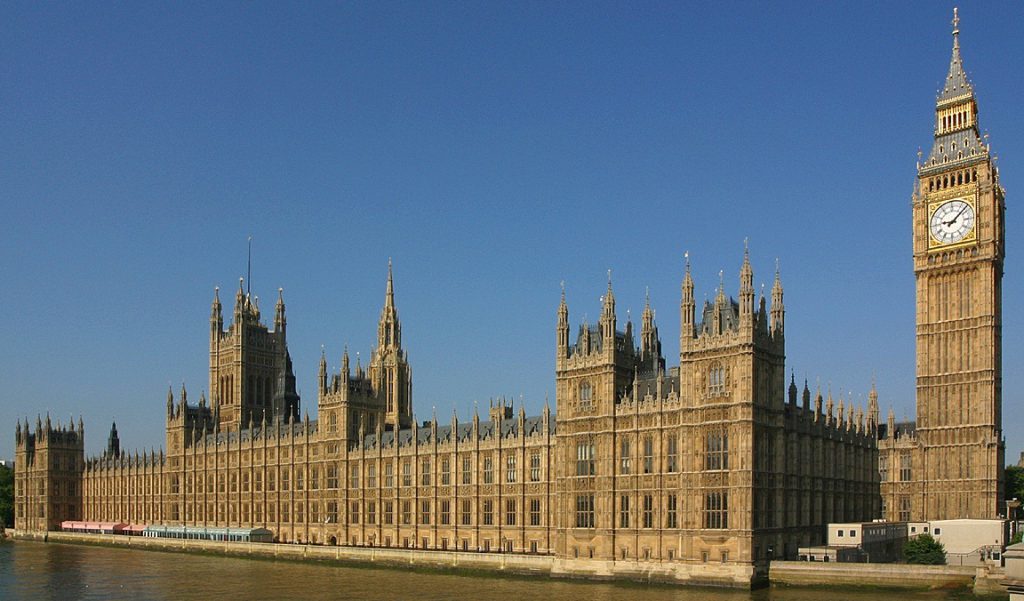
As the Chancellor George Osborne introduces his pre-budget statement on Tuesday (29/11/11), activists from UK Feminista (1) will stage a creative protest outside Parliament to highlight how the government’s cuts are shredding women’s rights. A protestor dressed as Scrooge and wearing a George Osborne mask will be ‘visited’ by the ghosts of women’s economic past, present and future, while activists sing alternative Christmas carols, with lyrics highlighting the impact of the cuts on women’s lives.

The Government’s austerity agenda is disproportionately affecting women. It is women who are experiencing the majority of public sector job losses and who are more reliant on the benefits and public services being cut (2). As a result, support among women for the Conservative party has been plummeting (3).

The ghost of women’s past visiting George Osborne at the protest will be wearing rubber gloves and bearing chains to illustrate how the cuts are turning back the clock and forcing women out of the workplace and ‘back into the kitchen’, while the ghost of women’s present will represent a victim of domestic violence unable to secure a place in a refuge due to legal aid cuts (4). The ghost of women’s future will wear a long, black hooded robe to warn of the destruction of women’s economic security.   


Kat Banyard, Director of UK Feminista, said:
“The Chancellor’s programme of cuts is slashing women’s economic independence. They are experiencing the bulk of public sector job losses and cuts to benefits and services. No amount of spin can hide the fact that this Government’s austerity agenda spells disaster for women. Women can see what’s happening, and they won’t put up with it.

“The Government needs to bring in emergency measures to stop the shredding of women’s hard won rights, like ring-fencing funding for SureStart centres and preventing local authorities from cutting services for victims of violence against women. Without these, the message being sent by the Chancellor this winter amounts to: “Women’s equality? Bah! Humbug!” 
 

For further details and to request interviews please contact Kat Banyard: 07775 855037, kat@ukfeminista.org.uk


Notes to editors

(1) UK Feminista supports people to campaign for equality between women and men. The protest is being staged by the organisation’s activist group set up in August this year. The group’s previous actions include a ‘meat market’ protest outside an international pornography trade summit, and future actions include a ‘Muff March’ on 10 December against the rise in labiaplasty.  www.ukfeminista.org.uk.

The protest will take place at 12:00-13:00 at Old Palace Yard, Houses of Parliament, Westminster, London, SW1.

(2) http://www.guardian.co.uk/society/2011/nov/04/women-equality-clock-back-fawcett?CMP=twt_gu
(3) http://blogs.telegraph.co.uk/news/danielknowles/100117516/david-camerons-woman-problem-is-not-something-a-tokenistic-spad-appointment-will-solve/
(4) 50% of domestic violence victims will no longer quality for legal aid under government proposals: http://www.guardian.co.uk/society/2011/oct/30/female-domestic-violence-victims-lose-out-in-legal-reforms


Posted in News | Leave a comment

We’re recruiting!

UK Feminista is currently recruiting for two very exciting paid positions within the organisation:


1) Project Manager: Grassroots Activism

The Project Manager will build a national activist network and support activists to raise awareness about the continued need for feminism. This will be done by supporting UK Feminista’s Regional Organisers, developing online training, information and campaign resources, and coordinating UK Feminista’s annual ‘Summer School’ event.

2) Project Manager: Policy & Campaigns

The Project Manger will coordinate a unique, high profile project called ‘Building a Feminist Future’. The aim of the project is to develop public and political consensus around where feminism is, where we want to get to, and how we get there. This will be achieved through a series of ‘big tent’ initiatives and associated campaign actions. 


The deadline for applications is 11th December 2011.


For more details and to apply click here.


Posted in News | 1 Comment

FEM 11 a storming success

On Saturday 12 November over 1000 feminists descended on London for FEM 11 – UK Feminista’s national conference. The sell-out event featured 20 seminars and workshops,  passionate debate on topics including the cuts and abortion rights, and trended on Twitter throughout the day.


Photo: Spiral Perspective


See photos from the event on Flickr.

Download the FEM 11 Brochure .


Press mentions of FEM 11

The Guardian | Jobs are a feminist issue. So are legal aid, tax and pensions

The Guardian | The rubber gloves are on: marchers to fight for women’s rights amid cuts

Guardian Women’s Blog | Women v David Cameron: things that annoy you most

Guardian Women’s Blog |Is government turning back the clock? 

Morning Star | Johnson snubs conference on women’s equality

Morning Star | Ken Livingstone says he’ll address scandal of unequal wages


Blog posts about FEM 11

Posted in News | 1 Comment

Whose media? Our media!

Guest post by Clare Cochrane, Oxford Feminist Network and Oxfordshire Reclaim the Night


Less than 20 hours to go until Oxfordshire Reclaim the Night 2011 and I’m running through a mental checklist of ‘things we have to sort out before the march’. We’ve printed off chant sheets, found the banners in the attic… But wait! We haven’t arranged for someone to film the march and make citizen media reports from the rally! I ring a member of Oxford’s Indymedia collective and blag a little digital video camera, then I call a friend who’s coming on the march and ask her if she’ll meet me in advance to pick up the camera and be our videojournalist for the night. Then the Indymedia guy rings me back and reminds me to make sure I remind people with cameras to email their photos to us as soon as they can, to go with the report I plan to write after the event…

There are a few reasons that feminists need to start using the alternative media channels to tell our own stories:

  • We need to create media reports of our own that tell the stories of our hard work and actions, not rely on the mainstream media with its own agenda to cover our action (because often they won’t or they’ll do so in a way that is highly unsatisfactory)
  • We need to create a public archive of our hard work and our fab actions and this is one way to do it – and in the process of creating our alternative media reports we are creating archivable material
  • We need to educate other activists who use these channels about feminism, alert them to our presence and inspire them with our brilliant activism – basically increase the visibility of feminism within the resistance movement(s) in the UK and further afield. The wider activist scene is filled with potential allies, but they don’t know much about feminism, and they don’t think that there are many (or event) feminist activists.

I realised the importance of archiving our activism earlier this year when I was asked to write a paper about the history of the revival of Reclaim the Night in Oxford, and a guide for future organisers. I realised that all I had to go on were our stories and the short write-ups we’d put together for the City Council Safer Communities Partnership grant reports.

The local mainstream media in Oxford do usually cover the annual Reclaim the Night march, and I gather that local media cover local marches in other places, too, but these stories don’t reach feminists elsewhere, and don’t spread the excitement and inspiration of local feminist activism. And like everyone, I find it dispiriting that there’s so little media coverage of London Reclaim the Night and the Million Women Rise marches. When feminist activism is covered by national media, there’s always a sense that they’re not telling the whole story.

Feminism has a very low profile amongst activists – partly I suspect because a lot of young activists (men and women) feel that ‘the battles have been won’ (if only I had a penny for every time someone had said that to me…) But also because they never hear about feminist activism.

So for all these reasons, I want to encourage (and if I have to, beg, plead with, implore) everyone involved in any feminist activism to engage with alternative media – local and national! Start with Indymedia which has both a national hub and local collectives (find your local one on the list). Reach out to blogs that are not specifically feminist, such as Topsoil , Bright Green and others. Post action alerts and reports after the event. Write feature stories. Make short films, then upload them to youtube or vimeo and post links to them to VisiononTV.

It’s not always going to be easy – moving out of our safe world of feminist blogs can expose us to an irritating lack of understanding about feminism (check out these recent comments on Oxford Indymedia) (And yes, I do get fed up with having to educate other activists as well as having to smash patriarchy in mainstream society.)

But this year, I want to be able to hear about all the amazing Reclaim the Night marches around the UK easily and quickly, in reliable films and blogs made by feminists for activists. I want to hear the whole story from my sisters’ own citizen reports.


Oxfordshire Reclaim the Night took place on 28th October. Watch videos of the event here!

Posted in News | 4 Comments

The Silent Feminists

Guest post by Breish Rowe, founder of Triangle.


Feminism is currently enjoying a surge in popularity and activism, with more groups being set up than ever. However, even with feminists shouting louder than ever before, there is a silent side to feminism, a side where the feminists don’t use their voice – not at all. Oh no…they use their HANDS.

Triangle is a feminist group, set up specifically for deaf women and those within the deaf community. The aim is to support those who use sign language as their primary form of communication and enable them to learn more about, and tackle, feminist issues.
It was set up because, although deaf people are by no means immune to the effects of gender inequality and often face disability discrimination too, information on feminist issues is by large inaccessible. Videos are not captioned. Sign language interpreters are not provided. Many people do not know sign language, and if they do, they know the very basics – which, let’s face it, hardly stands up in the middle of a heated political debate.

Because of this lack of access to information, the whirlwind of feminist activity has passed the deaf community by. If they cannot access information about oh-so-important issues, how can they even begin to fight for equality? Awareness is the first vital step towards empowerment. Knowledge is power, after all.

Triangle aims to generate just that – awareness of issues in an accessible format, so that we can prepare to fight the good fight, alongside our comrades.

So what can you do to help? Enrol on sign language classes. Create a budget for sign language interpreters at conferences – and don’t skimp on this as interpreters don’t come cheap. Caption videos where possible. Provide written radio transcripts. Most importantly of all – learn basic deaf awareness – this is so much more important than people realise.

A deaf woman suffering abuse at the hands of her partner went to a women’s shelter for help. She was turned away for ‘health and safety reasons’. Why? Because she would not be able to hear the fire alarm if it went off. If the staff had basic deaf awareness training, they would have known that very simple adjustments could be made in order to accommodate her – a vibrating fire alarm, a pager, even a fire marshal being made aware of the presence of a deaf person in the building. But because they felt unequipped, that woman had no other choice but to go back to her abusive partner.

Nobody should ever have to do that. Nobody. No matter their age, race, gender, religion, sexuality, background or disability, everyone has a right to live without fear.
Triangle is very busy making sure that never has to happen to anyone ever again. We are laying the foundations for progress and equality. It will be a long journey, but we will get there. Especially with your support.

So while you shout out for gender equality, we will be waving our hands in the air. Together, we can make things happen. So let’s get busy. We have a world to change.

Visit the Triangle website and Facebook group.

Posted in News | 2 Comments